
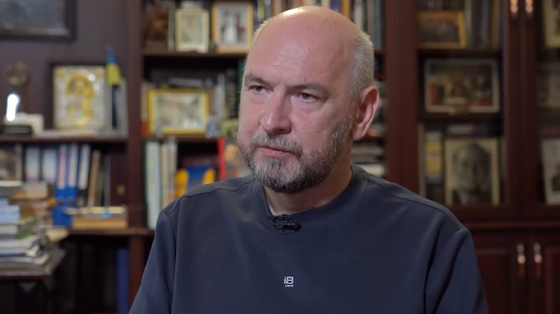
Oleksandr Ahudov is a rescuer from Mariupol who has served with the State Emergency Service for over 18 years. On the morning of February 24, he left his pregnant wife, four-year-old son, and family at home and headed to work. For the next few weeks, his life boiled down to a single routine: a call — ruins — people — another call.
The first few days were still an attempt to figure out where the front line was. Then it was gone. They went where even the military advised not to go: “The Russians are already there,” “They’re shooting people there.” But the calls were coming from exactly there, from basements, from destroyed buildings, from people who couldn’t get out on their own. The vehicle pulls up to a building, people are pulled out, loaded in, and literally within a minute, the place is hit by another strike. The ground shakes beneath the wheels, but at that moment it’s not yet fully clear that this fire is targeted.
The work quickly becomes routine in the worst sense of the word: clearing debris, crawling into basements, cutting openings so people can escape after shelling. Sometimes — under fire. Sometimes — when the shelling starts right in the middle of a rescue operation. Sometimes — having to retreat, leaving a person under the rubble, because any movement could cause everything to collapse, along with those who came to rescue.
In early March, Russian troops strike a maternity hospital in Mariupol. At that moment, Ahudov is there. Carries out women in labor and newborns. Something explodes nearby, they’re buried in rubble, but they keep working. It’s there that Oleksandr suffers his first concussion.
The Russian army encircles the city. About 300 people are hiding in the unit, including dozens of children. Rescuers lose contact with the rest of the unit. They begin the evacuation, there is no other option left. Evacuations are organized in convoys, including through occupied territories. The buses are overcrowded. Hundreds of families are on their way. It’s simply impossible to find a place for everyone. Then the parents hand their children over to the rescuers: “Get them out of this hell! We’ll find them somehow later”
March 16 — the final evacuation. The convoy leaves the unit. Five minutes later, the area is pounded by Grad rockets. Ahudov has already evacuated the civilians and his family, but he returns. Forty rescuers remain at the base. He drives under fire toward the already destroyed unit. The building is destroyed, the equipment is damaged, the area is littered with debris. The rescuers are in shelter. Fortunately, everyone is alive.
They gather the people and what’s left of the equipment, form a convoy, and try to leave the city. They’re under targeted fire. The first vehicle is hit to pin down the whole convoy. They drive as fast as they can, brake suddenly, and change course, trying to escape the shelling. Eventually, the occupiers seize the vehicles. But the people manage to get out. The road to Zaporizhzhia has over 20 occupier checkpoints. They pass through them by some miracle!
After Mariupol, it seems like the worst is already behind them, but it’s not. In Odesa, their daughter is born. The doctors immediately diagnose a severe heart defect. After one of surgeries was critical: the baby cannot breathe on her own for two days. No prognosis from doctors. The family waits, between life and death.
Later, the Ahudovs move to Dnipro. The older son, who survived shelling at the age of four, reacts differently, he falls silent. He withdraws into himself. Gradually, he begins to recover through music, he starts singing, has other lessons, and creative activities.
Ahudov himself suffers from the aftereffects of concussions and injuries sustained in Mariupol. During his subsequent service, he gets under shellings again, under aerial bombs. Another concussion. After treatment, he returns to work.
Oleksandr continues to serve in the Donetsk region. The hardest part during shelling is coping with the loss of children. During one of their missions, they rescue a nine-year-old boy. He looks very much like his son Serhii, the same age, the same hairstyle. At moments like these, Ahudov says, it’s hard to remain just a rescuer.
This job constantly forces him to choose: take a risk, or retreat and not lose the whole group.
Over the years of service, Oleksandr has received several awards: awards from the President of Ukraine – for the ATO and during the full-scale war, as well as the highest honor from the State Emergency Service.



.png "Names")


