Public Discussion “The City as a Target of War” Held in Kyiv. Urbicide, people’s lives under constant threat, and the documentation of wartime experiences were the main topics of a discussion organized by the Museum of Civilian Voices founded by the Rinat Akhmetov Foundation. The public discussion “The City as a Target of War” took place on October 30 at the Museum of the History of Kyiv. The event opened with the presentation of the second edition of Kateryna Savenko’s Diary.
«“This is a great honor and joy for us. Katya’s diary is of great significance even to those living through this war. It is a story about love, dreams, hope, and people, but above all, about her firm determination to remain in control of her own life and preserve her sense of self. We are now actively moving forward. We have already reached agreements with publishers to release English- and German-language editions of the diary,” explained Nataliia Yemchenko, Chair of the Foundation’s Supervisory Board, who moderated the public discussion.
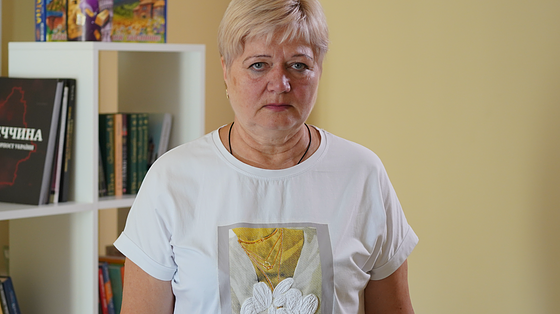
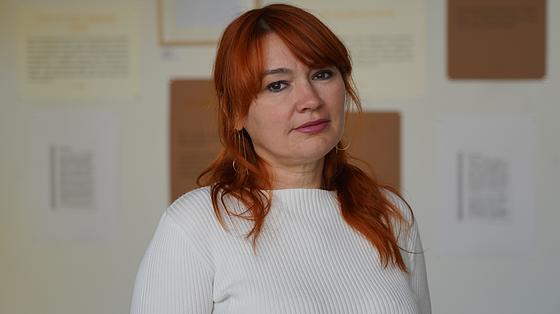
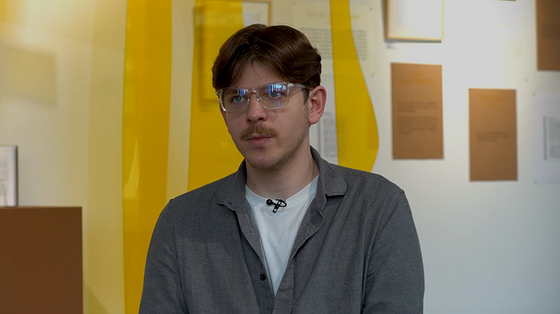
The discussion brought together psychologist Olena Voznesenska, historian and researcher of collective memory Anton Liagusha, and artist Anton Logov. The focus of the discussion was the concept of urbicide, a strategy employed by russian occupying forces in their war against Ukraine. Anton Liagusha explained that cities are now being destroyed not only as physical spaces but also as communities. This is because cities are not just buildings and infrastructure; they are also memories, emotions, neighborhoods, and people’s everyday lives.
«“The greatest blow to a city is a blow to the rhythm of city life and the lives of its communities. The systematic and deliberate destruction of Kyiv, Sumy, Chernihiv, and other cities is carried out by the enemy in order to later rewrite the history of these cities, occupy them, rebuild them, and claim that russia has always been here. That is why memory itself must become the narrative we build within ourselves as a nation,” Anton Liagusha noted.
According to him, memory serves as a kind of guide for future generations, helping society preserve its own identity. Art plays an important role in this process, transforming pain and personal experiences into profound artistic images. One example of such artistic reflection is Kateryna Savenko’s Diary, a personal account by a Mariupol resident of the first weeks of russia’s siege of the city. The publication was released with the support of the Rinat Akhmetov Foundation and Metinvest Group.
According to Anton Logov, what makes the diary unique is that it not only documents the tragedy but also conveys human experiences, emotions, and the ability to see beauty even in the most difficult circumstances.
«“There are sentences in it that hit you like bullets, shooting straight into you, because Katya lived through this. It is not made up. She showed the very best of human nature. That is why this truth resonates so deeply,” the artist says.
The participants in the public discussion also discussed the psychological consequences of urbicide for people, how the ability to adapt to life under dangerous conditions develops, and the importance of mutual support.
Since the beginning of russian aggression in 2014, the Rinat Akhmetov Foundation has collected and continues to preserve people’s testimonies about the war and their experiences. Today, the archive of the Museum of Civilian Voices contains more than 145,000 stories, including approximately 12,500 testimonies from Mariupol residents. Each story is part of the country’s historical record and a personal account of an individual whose voice deserves to be heard and whose experience must be preserved for future generations.