
Mariupol, March 2022. Matsuk City Hospital No. 4 on the Left Bank of the city. Everything around them is collapsing, the walls of the operating theatre shuddering with every incoming strike. Inside, however, it is an assembly line. Twenty major abdominal operations and amputations a day. Several operating tables at once. There are not enough surgeons, so gynaecologists and general practitioners step up to the operating table and learn to treat blast injuries in surgery.
Chief Physician Andrii Servetnyk had prepared for the worst well in advance. Thanks to the experience gained during the COVID-19 pandemic, he and his team had managed to build up substantial stocks of medicines, painkillers and saline solution at the hospital. The doctors also managed to collect around 200 litres of donated blood from the blood transfusion centre, which later saved hundreds of lives. They also got modern battery-powered ventilators up and running. Even so, no one could have foreseen destruction on such a scale.
An eight-year-old girl, Masha, is brought to the hospital: a concrete slab had fallen on her, fragments had penetrated her skull, and she spent six days on a ventilator. The trauma surgeon rushes to Servetnyk: “We urgently need a neurosurgeon!”. But where could one be found in a besieged city? Servetnyk can only swear in reply: “Right, I’ll just go and find you one.” The doctors open a textbook, read the relevant chapter immediately before the operation, and go into theatre. A week later, the little girl, who had been given no chance of survival, is eating with a spoon and talking on her own.
Later, colleagues send Servetnyk a photograph of Masha from a hospital in occupied Donetsk. As it turned out, the occupation authorities had used the child’s rescue for propaganda purposes, presenting the work of Mariupol’s doctors as their own achievement.
When a little boy is brought in with his leg torn off and the donated blood has run out, an intern donates blood himself so that the child can survive.
Fuel for the generator powering the ventilators keeping critically ill patients alive is siphoned by doctors from bombed-out petrol stations under shellfire.
Water, too, is collected under fire. Later, Andrii Hnatiuk, Head of the Internal Medicine Department, who had gone to fetch water for the hospital, is shot dead by the russians in his car.
As the shelling intensifies, the bodies of Mariupol residents killed in the attacks are brought from the streets and laid beneath the hospital walls. The bodies are placed in bags beside the admissions department. A terrifying mound of bodies, several layers deep, soon forms there.
Later, the russians seize all the hospital’s records in an attempt to conceal the true scale of the tragedy.
The occupation forces gradually tighten the noose around the medical staff. Andrii Servetnyk has always been openly pro-Ukrainian. He remains at the hospital until the occupiers are almost upon them. Then Andrii and several other medics manage to escape the besieged city. They take ampoules of narcotic drugs with them. They agree in advance that, if any of them suffers a critical injury, they will inject themselves with a lethal dose. In the end, however, they leave the city unharmed.
The moment he reaches Ukrainian-controlled territory, Servetnyk races to the regional hospital in Zaporizhzhia. He needs to warn his colleagues, pass on the invaluable experience of running a hospital in complete isolation under siege, and show them how to prepare for the mass arrival of wounded patients.
From there, the struggle moves onto the international stage. Chief Physician Andrii Servetnyk travels to Brussels. At the European Parliament, he looks Members of Parliament in the eye and tells them about every day of the hell that was Mariupol, and about what his heroic team achieved under relentless bombing.
There, Andrii Servetnyk represents the Mariupol Justice platform. The platform collects and verifies eyewitness testimonies of russian war crimes. All of this material is helping to build the body of evidence for a future international tribunal, so that the aggressor can be held accountable for every life taken.
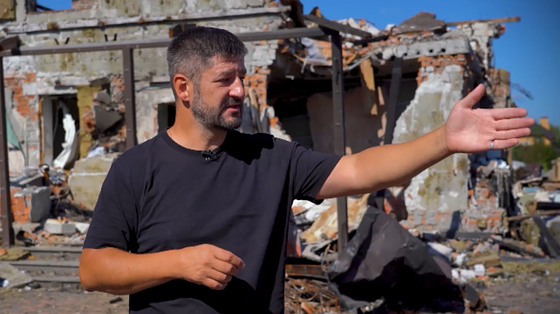
The story of Andrii Servetnyk has become part of the Rinat Akhmetov Foundation’s Museum of Civilian Voices, the world’s largest collection of testimonies from Ukrainian civilians about the war.



.png "Names")


