
Ilya Matvienko - the first Ukrainian child to be returned after being taken by russian forces - has shared his experiences with European leaders at an event in Strasbourg. His testimony is preserved in The Museum of Civilian Voices by the Rinat Akhmetov Foundation. The Museum’s archive is the world’s largest collection of civilian stories impacted by russia’s war against Ukraine. To date, the Museum has gathered over 140,000 stories, including around 12,500 from residents of Mariupol.
Since the beginning of the full-scale war, russian forces have deported at least 19,500 Ukrainian children, including 1,300 from Mariupol. Ilya Matvienko was one of these children.
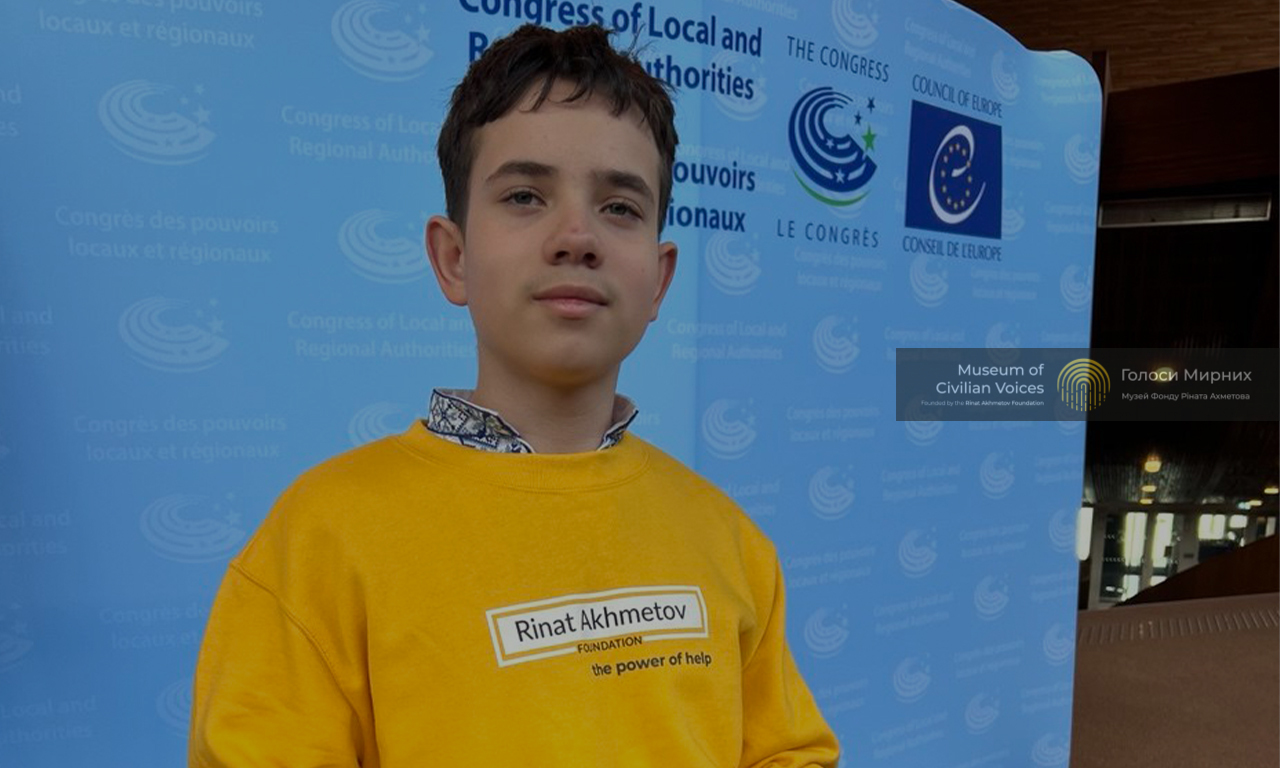
The boy was 9 years old when his mother was killed in shelling in 2022, and he sustained a severe leg injury. In a hospital in occupied Donetsk, he could not even walk. After being heroically rescued by his grandmother Olena Matviienko and returned to Ukrainian-controlled territory, Ilya received treatment and rehabilitation from the Rinat Akhmetov Foundation, which helped him on the road to physical and psychological recovery.
His story has now been heard during the special event “The European Municipal Dimension of Accountability: The Mariupol Justice Initiative,” where the Rinat Akhmetov Foundation is a systemic partner. The event took place as part of the 50th session of the Congress of Local and Regional Authorities of the Council of Europe in Strasbourg.
At the center of the discussion was the Mariupol Justice initiative, which documents crimes and promotes holding russia accountable. For the first time, the event systematically presented Mariupol not only as a tragedy but also as a case for international legal assessment, placing it on the European agenda.
“We must speak the truth aloud! We are here to tell the truth about the tragedy of Mariupol through documenting russia’s crimes. I hope that a coalition for justice for Ukraine will be formed within the Congress of the Council of Europe, capable of holding russia accountable for the crimes committed against the Ukrainian people,” said Vadym Boychenko, Mayor of Mariupol and Head of the Mariupol Military Administration.
One of the key highlights of the event was personal testimonies of those who survived the siege of Mariupol. Ilya Matvienko shared his experiences not only as personal testimony but also as a call for justice.
“There are so many reasons why it is important to speak about this. Through our stories, we remind Europe not to forget that we exist; that there is this enormous problem represented by russia and everything it is doing to Ukraine. I dream of victory and of russia being held accountable,” says Ilya Matvienko.


.png "Names")


